

Quick answer
Halong bay cruises 2 nights operate year-round with daily departures from Ha Long City, Quang Ninh Province. Standard routes charge a 290,000 VND conservation fee per person. Most vessels embark at noon and return around 15:00 on day three, covering karst formations, floating villages, cave systems and two overnight anchorages in protected waters. Early morning arrival (06:30–12:00) ensures availability and avoids congestion at embarkation points.
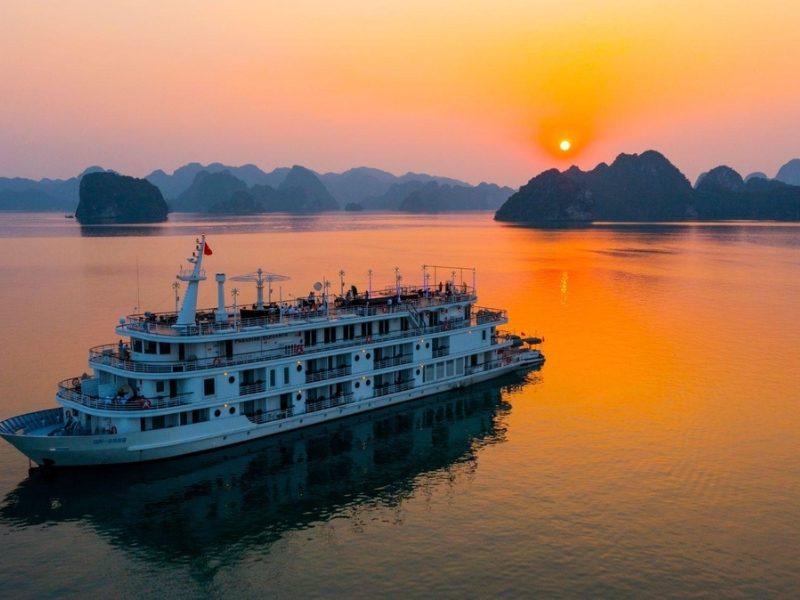
More than 500 limestone karst islands rise from Halong Bay's emerald waters, and the two-night cruise format remains the most popular way to reach the archipelago's outer zones—areas inaccessible to day-trippers. Vessels range from traditional wooden junks to steel-hulled expedition ships, but the core itinerary follows a similar rhythm: embarkation at Tuan Chau Marina, a slow drift through the UNESCO core zone, then overnight anchoring in one of three designated areas where engine noise is prohibited after sunset. The conservation fee of 290,000 VND applies to all passengers entering standard routes and is collected at the marina gate before boarding. This fee supports heritage preservation and waste-management infrastructure across the bay. Cruise operators do not include this charge in their advertised rates, so budget an additional amount per traveler. Vessels departing for Bai Tu Long Bay or Lan Ha Bay extensions may pass through multiple fee zones, but the single 290,000 VND charge covers most standard two-night routes. Day one typically includes kayaking through karst grottoes and a late-afternoon visit to a cave system such as Sung Sot or Thien Cung. Day two moves into less-traveled waters—fishing villages built on floating platforms, pearl farms, or secluded beaches accessible only by tender. The return journey on day three retraces the route at a faster pace, with disembarkation scheduled for mid-afternoon to accommodate Hanoi-bound transfers. Smaller vessels may anchor closer to the core zone, while larger ships favor the deeper channels near Lan Ha Bay. Timing matters. Arriving at the marina between 06:30 and 12:00 allows time for check-in, cabin assignment, and embarkation before the midday departure window closes. Late arrivals risk missing the boat entirely, as most operators will not delay departure for individual passengers. The two-night format also means two sunrises on the water—widely considered the bay's most photogenic hours, when mist clings to the karst peaks and fishing boats return with the night's catch.
“The two-night format remains the most popular way to reach the archipelago's outer zones—areas inaccessible to day-trippers.”
Planning Your Halong Bay Cruises 2 Nights Itinerary
Most two-night cruises follow a classic loop through Ha Long Bay's core islands, departing around midday on Day 1 and returning late morning on Day 3. The plan below reflects typical scheduling across mid-range and premium vessels.
Embarkation and Lunch Cruise
Board at Tuan Chau Marina or Hon Gai Pier and enjoy lunch as the vessel sails toward the limestone karst zone. Check your cruise confirmation for exact boarding time, usually between 11:30 and 12:30.
Afternoon Kayaking or Cave Visit
Stop at Luon Cave or Ba Hang floating village for kayaking, or visit Sung Sot Cave on foot. Activities last 1.5–2 hours; wear shoes with grip for cave paths.
Sunset and Onboard Dinner
Return to the vessel for sunset viewing from the sundeck, followed by a set dinner. Some itineraries include evening squid fishing or cooking demonstrations.
Morning Tai Chi and Breakfast
Optional tai chi on deck at sunrise, then buffet breakfast while cruising to a secondary zone like Bai Tu Long or Lan Ha Bay.
Island Trekking or Beach Time
Visit Ti Top Island for a beach stop and summit viewpoint (400 steps), or explore Cat Ba Island trails. Budget 2–3 hours including transfer by tender.
Additional Excursion and Leisure
Second kayaking session, a pearl farm visit, or free time onboard. Late afternoon is typically unscheduled for relaxation or spa treatments.
Brunch Cruise Back
Light activities such as a cooking class or another cave visit, then brunch as the vessel returns to port. Disembarkation is usually between 10:30 and 11:30.
Disembark and Transfer
Clear your cabin and settle any onboard charges before stepping ashore. Arrange your onward transport in advance to avoid wait times at the marina.
Best Time of Year for Halong Bay Cruises 2 Nights
The optimal window for a two-night cruise is during the spring (March to May) or autumn (September to November) months. These periods offer stable weather conditions and moderate temperatures, which are necessary for extended stays on the water.
Spring (March–May)
ModerateMild with clear skies, 20°C–28°C
Ideal for outdoor excursions and kayaking activities throughout the bay.
Autumn (September–November)
ModerateCooler air, 22°C–29°C
Stable conditions with lower humidity, suitable for longer cruise durations.
Summer (June–August)
HighHot and humid, 28°C–35°C
Increased risk of tropical storms and occasional itinerary adjustments due to weather.
Winter (December–February)
LowChilly and misty, 15°C–20°C
Expect dense fog and cooler temperatures, leading to quieter atmosphere.
Verdict: Choose a two-night cruise during the shoulder months of April or October to balance favorable weather with manageable crowd levels.
Getting to Your Halong Bay Cruises 2 Nights Departure
Halong Bay is located in Ha Long City, Quang Ninh Province, Vietnam. Most travelers reach the departure ports via private car or shuttle bus from Hanoi using the Ha Long – Hai Phong Expressway.
Hanoi to Ha Long via Ha Long – Hai Phong Expressway
Hanoi to Ha Long via Ha Long – Hai Phong Expressway
Hanoi to Ha Long port terminals
Preparation Checklist for Halong Bay Cruises 2 Nights
Pack light and bring key documents to ensure smooth embarkation and a comfortable overnight stay on board.
-
Bring passport or Vietnamese ID — Required for port check-in and cabin registration
-
Pack light overnight bag — Cabins have limited storage and you'll move between decks frequently
-
Include swimwear and sun protection — Many itineraries feature beach stops and sun-exposed deck time
-
Carry small denomination cash — Onboard purchases and tips are typically settled in Vietnamese dong
-
Confirm booking voucher accessibility — Digital or printed confirmation speeds up the embarkation process
-
Pack motion sickness tablets if needed — Open-water sailing can be rough during monsoon months
-
Bring chargers and power adapters — Cabins have limited outlets and voltage may differ from home standards
Check availability
Frequently asked questions about halong bay cruises 2 nights
Everything you need to know about halong bay cruises 2 nights